When people discover I’m a tea enthusiast, one question inevitably comes up: “Chinese green tea vs Japanese green tea; which is better?” My answer always surprises them: both. Always both. In fact, I consider it almost tragic to limit yourself to just one tradition when both offer such distinct, remarkable experiences.
I’ll admit, I have a deep love for Japanese green tea, especially the profound umami of gyokuro. But my tea cabinet tells a more complete story. Alongside my precious gyokuro and sencha sits an equally treasured collection of Chinese green teas. These aren’t competitors in my collection; they’re companions, each serving different moments, moods, and purposes in my daily tea ritual.
The debate between Chinese green tea vs Japanese is, in my view, the wrong question. The right question is: what can each tradition teach us, and how does each enrich our tea experience? Let me share why I’ve committed to keeping both in my collection, and why you might want to consider doing the same.
The Fundamental Difference: Processing Methods
Before we can appreciate what makes Chinese green tea vs Japanese distinct, we need to understand the single most important difference: how the leaves are processed after harvesting.
Chinese Green Tea: The Art of Pan-Firing
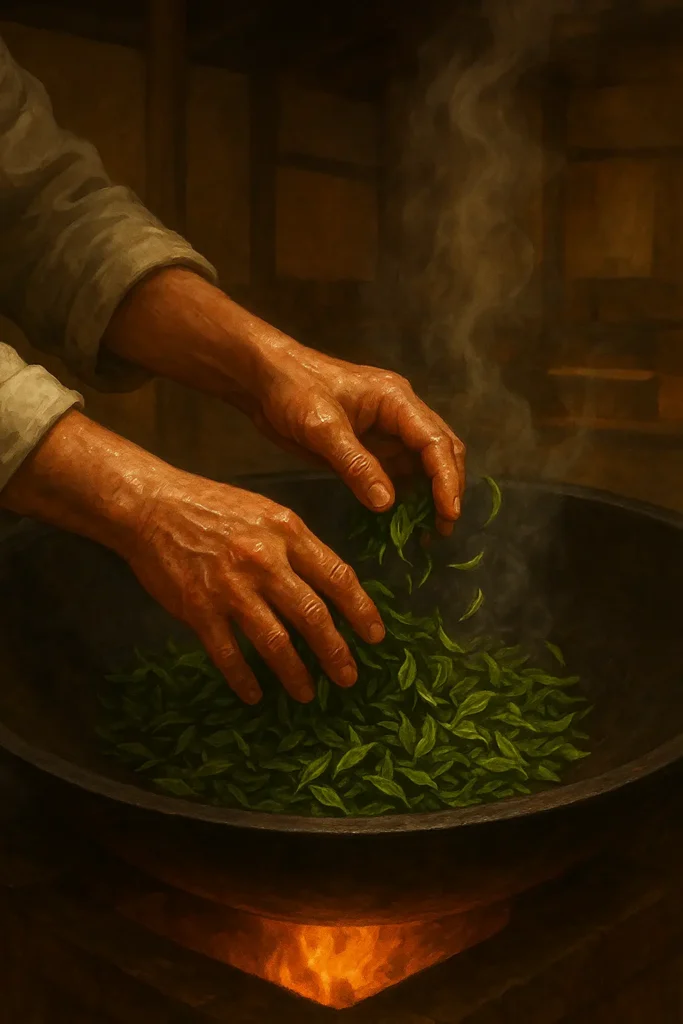
Chinese green tea is traditionally pan-fired (also called “fixing” or “kill-green”) during its processing. Fresh tea leaves are heated in large woks or pans at high temperatures, which stops oxidation and removes moisture. This process requires incredible skill. The tea master must continuously move the leaves by hand, judging temperature and moisture by feel and experience. Different pan-firing techniques produce different leaf shapes: some are pressed flat, others rolled into pearls or twisted into spirals.
This pan-firing creates Chinese green tea’s characteristic nutty, sometimes toasty flavor profile. The high heat caramelizes some of the natural sugars in the leaves, adding complexity and sweetness.
Japanese Green Tea: The Precision of Steaming
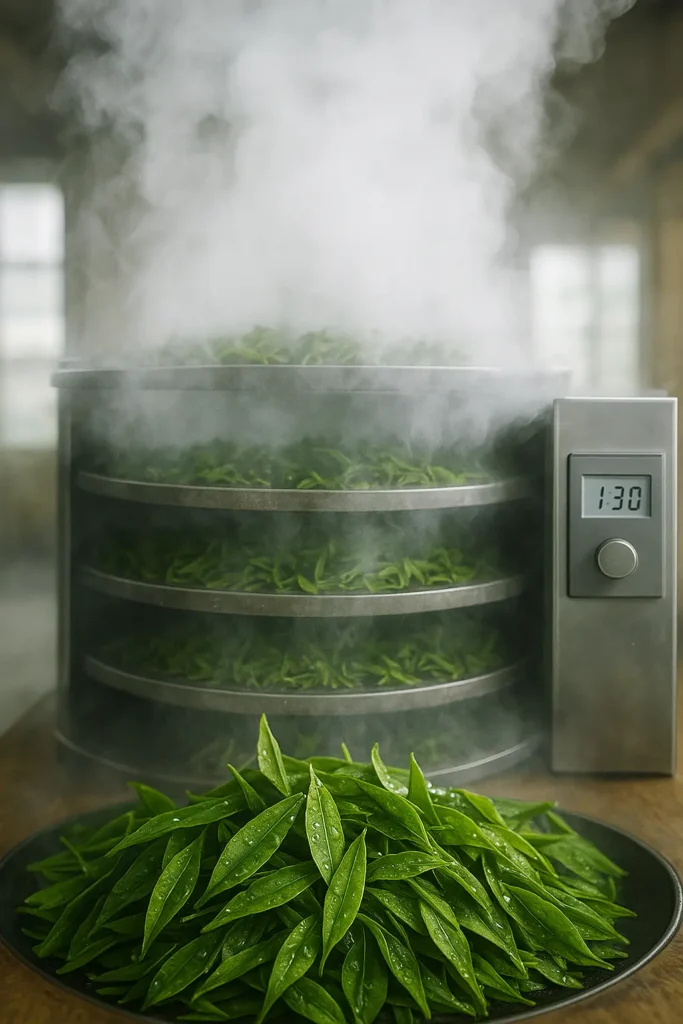
Japanese green tea takes a completely different approach. After harvesting, leaves are immediately steamed for anywhere from 30 seconds to two minutes. This steaming halts oxidation while preserving the fresh, vegetal character of the leaves. The process is precise and controlled, typically done with modern equipment that ensures consistency.
Steaming creates Japanese green tea’s signature bright green color and fresh, grassy, umami-forward flavor. Because the leaves aren’t subjected to the same high heat as pan-firing, they retain more of their original amino acid content, particularly L-theanine, which contributes to that savory umami taste.
Why This Matters
Understanding this fundamental difference helps you appreciate that Chinese green tea vs Japanese isn’t about one being superior. It’s about two distinct philosophical approaches to processing the same plant. One emphasizes transformation and complexity through heat; the other emphasizes preservation and purity through gentle steaming. Both are valid, both are beautiful, and both deserve a place in your tea exploration.
Chinese Green Tea: The Nutty, Complex Character
My love affair with Chinese green tea began with a cup of authentic Longjing (Dragon Well) that i happened to taste as a sample from a small producer from Hangzho. I’d tried “Dragon Well” before from tea shops, but this was different. Sweet, with a beautiful roasted chestnut aroma and a lingering orchid-like finish. That cup opened my eyes to what Chinese green tea could be.
The Depth of Chinese Tea Tradition
China has been cultivating tea for over 4,000 years, and that history shows in the diversity and sophistication of their green teas. Unlike Japan, which focuses on relatively few green tea types (mostly variations of steamed tea), China produces hundreds of distinct green tea varieties, each with its own character, story, and terroir.
My Chinese Green Tea Favorites
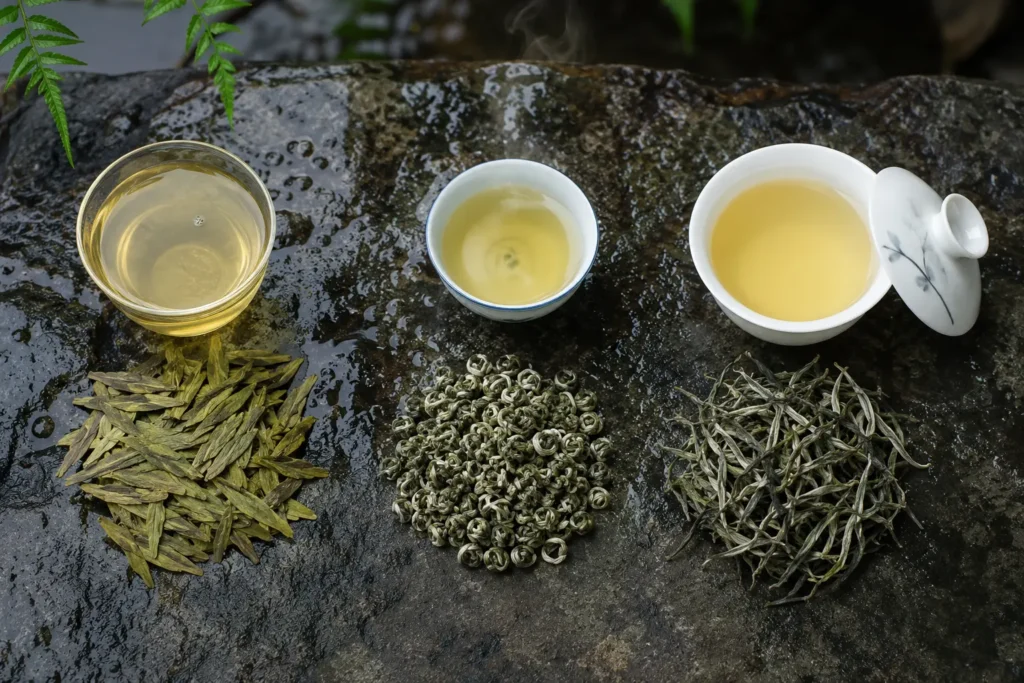
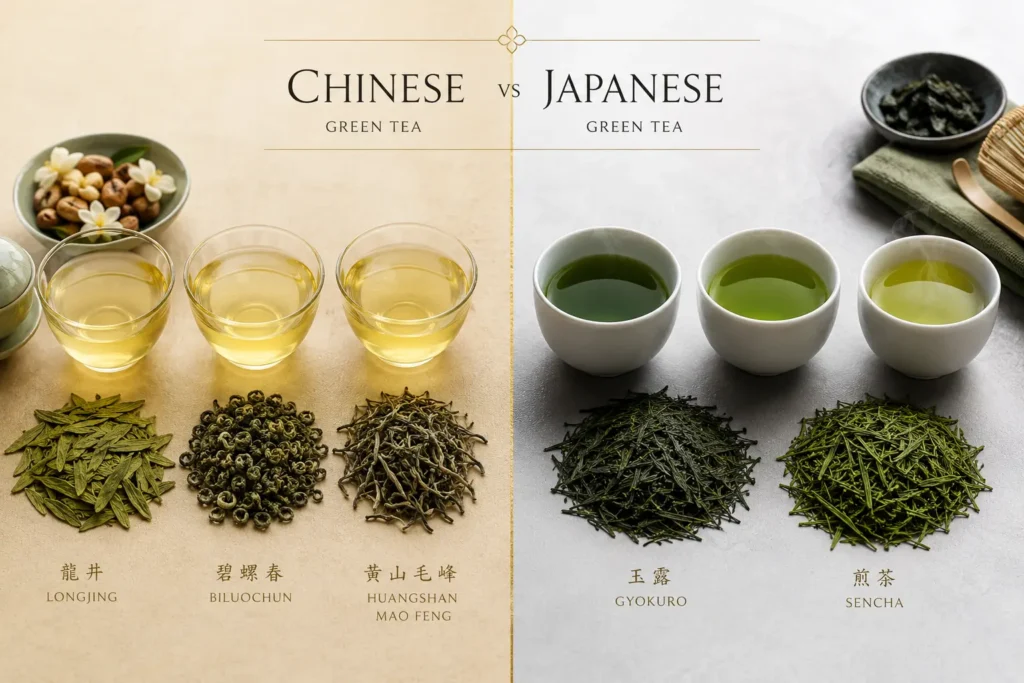
Longjing (Dragon Well) remains one of my absolute favorites. Premium Longjing from the West Lake region has this incredible balance. Nutty and sweet, with a smooth, almost buttery mouthfeel. The leaves are beautifully pressed flat, and when you brew them, they stand upright in the glass like little swords. I reach for Longjing when I want something comforting and contemplative, especially in the afternoon.
Biluochun (Green Snail Spring) is delicate and slightly fruity, with a more subtle character than Longjing. The leaves are hand-rolled into tiny spirals covered in fine white hairs. When brewed properly (and this tea is sensitive to temperature), it produces a light, slightly sweet liquor with floral notes. This is my spring tea, perfect for those first warm days of the season.
Huangshan Mao Feng from the Yellow Mountains offers something different—a more pronounced vegetal character than other Chinese greens, but still with that distinctive nutty undertone. It has a lovely orchid aroma and a clean, refreshing finish. I find myself drinking this one on busy mornings when I need clarity and focus.
The Flavor Profile
What unites these Chinese green teas is a certain warmth and complexity. The pan-firing creates layers. You might taste nuttiness upfront, then sweetness, then perhaps floral or fruity notes emerging as the tea cools. There’s often a pleasant astringency that’s gentler and more rounded than what you might find in lower-quality green teas.
The mouthfeel tends to be smooth and sometimes slightly viscous, coating your palate pleasantly. The finish can linger for minutes, evolving and revealing new nuances.
When I Reach for Chinese Green Tea
I find myself gravitating toward Chinese green tea in the afternoons and evenings. There’s something inherently calming about the nutty, sweet character. It’s like a warm embrace in a cup. I also prefer Chinese green tea when I’m having conversations or working on creative projects. The complexity gives my mind something to appreciate without demanding the full attention that Japanese gyokuro requires.
Chinese green tea also pairs beautifully with food, particularly lighter fare. I love it with vegetarian dishes, white fish, or simply with some nuts and dried fruit.
Brewing Considerations
Chinese green teas generally prefer slightly cooler water than you might expect. Around 75-80°C (167-176°F) for most varieties, though delicate ones like Biluochun do better at 70-75°C (158-167°F). The beauty of Chinese green tea is its forgiving nature and excellent re-steeping capability. Good Longjing can easily give you 4-5 infusions, each revealing different aspects of the tea.
I typically use a gaiwan or glass cup for Chinese greens, which allows me to watch the leaves unfurl and appreciate their beauty.
Japanese Green Tea: The Umami, Vegetal Experience
If Chinese green tea won my respect, Japanese green tea won my heart. Specifically that first transcendent cup of proper gyokuro that introduced me to the concept of umami in tea. The experience was so profound that I initially struggled to describe it to friends: “It’s savory… but sweet? Like drinking liquid silk made from the ocean and a garden?”
The Purity of Japanese Tea Tradition
Japanese tea culture takes a different approach than Chinese. Where China celebrates diversity and regional variation, Japan has perfected a smaller range of teas to an almost obsessive degree. The focus is on precision, consistency, and refinement. Every step is measured, every variable controlled.
This might sound limiting, but the result is remarkable. Japanese tea producers have mastered the art of coaxing specific flavors from the tea plant through cultivation techniques like shading, steaming duration, and processing methods.
My Japanese Green Tea Staples
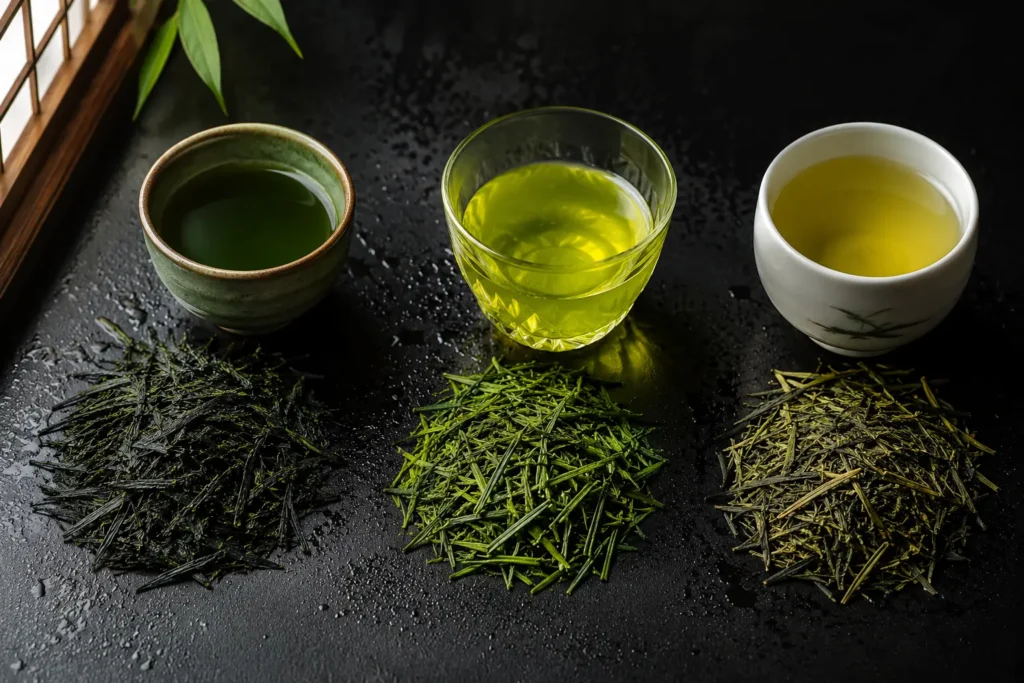
Gyokuro is, without question, the jewel of my collection. That umami-forward character, the result of 20-30 days of shading before harvest, creates a flavor unlike anything else in the tea world. It’s sweet, savory, almost brothy, with a texture that feels luxurious in your mouth. The marine-like notes remind me of nori and fresh sea vegetables, but in the most elegant way possible.
I reserve gyokuro for special moments. Quiet mornings when I can fully focus on the experience, or times when I need to center myself. It’s meditative tea, demanding presence and attention, rewarding you with layers of complexity across multiple infusions.
Sencha is my daily Japanese green tea. More accessible than gyokuro but still distinctly Japanese, good sencha offers that characteristic vegetal, slightly grassy flavor with pleasant umami undertones and a refreshing astringency. It’s energizing without being aggressive, perfect for morning clarity or an afternoon pick-me-up.
Sencha occupies the middle ground. Lghtly shaded like gyokuro but for a shorter period (about 7-10 days). It gives you more umami and sweetness than sencha without the intensity or price tag of gyokuro. I think of it as my “everyday luxury” option.
The Flavor Profile
Japanese green tea is immediately recognizable by its bright, vegetal character. The steaming process preserves those fresh, grassy notes that taste almost like spring itself. There’s often a pronounced umami. Such a savory, mouth-filling quality that’s hard to describe but unmistakable once you’ve experienced it.
The best Japanese green teas have minimal astringency and bitterness (assuming proper brewing). Instead, they offer sweetness and depth, with that characteristic oceanic quality that sets them apart from any other tea tradition.
The color in the cup is typically a vibrant, bright green. Sometimes almost glowing. The aroma is fresh and invigorating, vegetal and clean.
When I Reach for Japanese Green Tea
Mornings are Japanese tea time for me. There’s something about that fresh, energizing character that pairs perfectly with the start of the day. Sencha gives me focus and clarity without the jitters. When I need to deeply concentrate or enter a flow state, gyokuro is my companion.
I also prefer Japanese green tea when I’m drinking tea alone or in quiet company. These teas invite contemplation and presence in a way that feels distinctly different from the social, conversational nature of Chinese green tea.
Brewing Considerations
Japanese green tea is more particular about brewing parameters than Chinese green tea. Temperature is crucial: too hot, and you’ll extract excessive bitterness and destroy the delicate umami character. Sencha does well at 70-80°C (158-176°F), while gyokuro demands even cooler water-50-60°C (122-140°F) for the first infusion.
Steeping time matters too. Japanese green teas typically steep for shorter periods than Chinese greens- often just 60-90 seconds for sencha, and sometimes as little as 30-45 seconds for subsequent infusions.
I use a kyusu (Japanese side-handle teapot) for most of my Japanese teas. The fine mesh filter captures even the smallest leaf particles, resulting in a clean, sediment-free cup while still extracting full flavor.
Side-by-Side: Chinese Green Tea vs Japanese
Having both traditions in my collection has taught me to appreciate the contrasts. Let me break down the key differences you’ll notice when comparing Chinese green tea vs Japanese directly.
Visual Appearance
In the cup, Chinese green tea typically ranges from pale yellow to light golden-green. The liquor is often clearer, more translucent. Japanese green tea, by contrast, is usually a brighter, more vibrant green—sometimes almost glowing with that characteristic jade color.
The dry leaves also differ significantly. Chinese green tea leaves come in various shapes—flat (Longjing), twisted (many varieties), or spiral (Biluochun). Japanese green tea leaves are typically needle-shaped and a deeper, more uniform green color.
Aroma Profile
Chinese green tea often has a roasted, nutty aroma with floral or fruity undertones. There’s a warmth to the scent, almost toasty. Japanese green tea smells fresh, grassy, and vegetal—like walking into a garden after rain. Higher-grade Japanese teas have that distinctive marine, seaweed-like aroma that signals umami.
Taste and Mouthfeel
This is where the differences really shine. Chinese green tea tends toward nutty, sweet, and sometimes floral flavors. The astringency is usually rounded and pleasant, and there’s often a subtle complexity that unfolds as you drink. The mouthfeel can be smooth, sometimes slightly viscous.
Japanese green tea is all about umami and freshness. That savory, almost brothy quality dominates, balanced by natural sweetness (especially in shaded teas). The vegetal, grassy notes are pronounced. The mouthfeel of premium Japanese green tea is silky and coating.
Caffeine and L-Theanine
Both Chinese and Japanese green teas contain caffeine and L-theanine, but the ratios differ. Japanese green tea, particularly shade-grown varieties like gyokuro, tends to have higher L-theanine content because shading increases amino acid production. This creates that characteristic calm alertness—focused energy without jitters.
Chinese green tea provides a more moderate caffeine experience with good L-theanine balance, though generally not as pronounced as shaded Japanese teas.
Re-Steeping Capability
Here’s where Chinese green tea often has an advantage. Good quality Chinese greens can typically be steeped 4-6 times, with each infusion revealing different characteristics. Japanese green tea, while re-steepable, typically gives you 2-3 quality infusions before the flavor diminishes significantly.
Price Considerations
Both traditions offer teas across all price ranges, but premium Japanese green tea (especially gyokuro) tends to command higher prices due to the labor-intensive shading and processing methods. Excellent Chinese green tea can often be found at more accessible price points, though top-tier teas from famous regions can be quite expensive.
Shelf Life
Japanese green tea is best consumed within 6-12 months of production for optimal freshness. That bright, vegetal character fades with time. Chinese green tea, particularly pan-fired varieties, tends to age slightly better, often remaining enjoyable for 12-18 months when stored properly. Some Chinese green teas even improve slightly with a few months of aging.
Why I Refuse to Choose
Here’s what I’ve learned after years of drinking both Chinese green tea and Japanese green tea: choosing between them would be like choosing between spring and autumn, between sunrise and sunset. Both are beautiful, both are essential, and both enrich my life in different ways.
Different Moods, Different Teas
Some mornings I wake up craving the bright clarity of sencha—its fresh, vegetal character matches my need for alertness and focus. Other afternoons, I want the warm, nutty embrace of Longjing, something comforting to accompany reading or quiet contemplation.
When I’m stressed or scattered, gyokuro’s demanding presence forces me to slow down and pay attention. When I’m entertaining friends, Chinese green tea’s approachable character and conversational nature makes it the perfect choice.
Seasonal Preferences
I find my consumption patterns shift with the seasons. Spring and summer call for more Japanese green tea—that fresh, invigorating quality matches the season’s energy. As weather cools, I gravitate more toward Chinese green tea’s warmth and complexity.
But these aren’t rules; they’re tendencies. Sometimes a cold winter morning demands the bright wake-up call of sencha, and sometimes a hot summer afternoon wants the cooling sweetness of Longjing.
Food Pairing Considerations
Chinese green tea pairs beautifully with a wider range of foods, particularly anything nutty, vegetarian, or lightly sweet. Japanese green tea is more particular—it shines with Japanese cuisine, seafood, and dishes where you want the tea’s umami to complement rather than compete.
The Richness of Having Both
Perhaps most importantly, having both traditions in my collection has made me a better tea drinker. Each tradition teaches different lessons. Chinese tea culture taught me about patience, the beauty of imperfection, and the joy of endless variety. Japanese tea culture taught me about precision, presence, and the profound depths hidden in apparent simplicity.
When you only drink one tradition, you risk missing half the conversation that green tea is having with the world. Both Chinese green tea and Japanese green tea represent thousands of years of human ingenuity, cultural evolution, and agricultural mastery. Why limit yourself to just one story?
Building Your Dual Collection
If you’re convinced to explore both Chinese green tea vs Japanese traditions (and I hope you are), here’s how to build a collection that serves you well:
Starter Recommendations
For Chinese green tea, begin with:
- Longjing (Dragon Well) from a reputable source-this is the benchmark Chinese green tea
- Biluochun for something more delicate and floral
- Mao Feng for variety and complexity
For Japanese green tea, start with:
- Quality sencha from Shizuoka or Kagoshima-this is your daily drinker
- Kabusecha to experience shaded tea without gyokuro’s price tag
- Gyokuro when you’re ready to splurge-buy small amounts of premium quality
Storage Considerations
Japanese green tea requires more careful storage due to its delicate nature. I keep mine in airtight containers in a cool, dark place, sometimes even in the refrigerator for gyokuro. Chinese green tea is more forgiving but still benefits from airtight containers away from light, heat, and moisture.
Keep them separate -Japanese tea’s vegetal character can overpower the subtler Chinese teas if stored together.
Sourcing Quality Teas
For Chinese tea, look for vendors who source directly from tea-producing regions and can tell you about the specific origin and harvest time. For Japanese tea, vendors who work directly with Japanese tea gardens and can provide information about shading duration and steaming level are your best bet.
Buy smaller quantities more frequently rather than large amounts. Fresh tea is exponentially better than old tea, regardless of how well it’s stored.
Budget Considerations
You don’t need to spend a fortune to experience both traditions well. Allocate your budget based on what you’ll drink most frequently. Perhaps that’s affordable daily sencha and mid-range Longjing, with occasional splurges on premium gyokuro or competition-grade Chinese tea.
Embracing Both Traditions
The question “Chinese green tea vs Japanese-which is better?” ultimately reveals a misunderstanding of what tea is about. Tea isn’t a competition; it’s a conversation across time, culture, and geography. It’s humanity’s relationship with a single plant, expressed through thousands of different voices.
I keep both Chinese and Japanese green tea in my collection because I refuse to choose between those voices. Each morning, I get to decide whether I want the warm complexity of pan-fired leaves or the bright clarity of steamed ones. Each cup is an opportunity to experience something different, to learn something new, to appreciate another facet of this incredible beverage.
My Chinese teas remind me that sometimes complexity and warmth are exactly what the moment needs. My Japanese teas remind me that sometimes simplicity and precision reveal the deepest truths. Together, they make me a more complete tea drinker and, I’d like to think, a more complete person.
If you’ve been limiting yourself to just one tradition, I encourage you to explore the other. If you love Japanese tea’s umami character, try experiencing the nutty sweetness of good Longjing. If you’re devoted to Chinese tea’s complexity, taste what happens when leaves are steamed instead of pan-fired.
Your tea cabinet and your palate! Will be richer for it. After all, why choose between two treasures when you can have both?