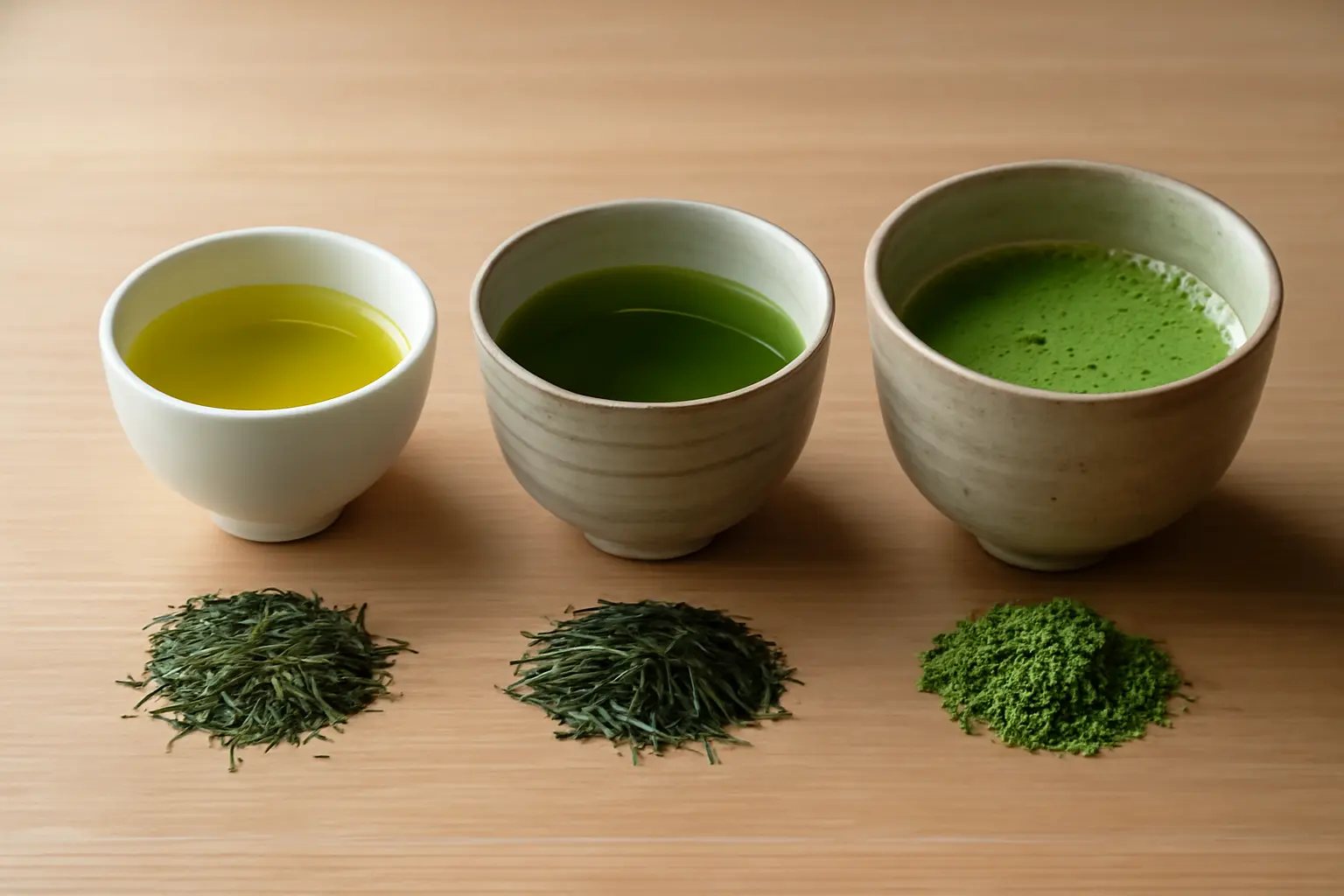
As a tea enthusiast who has spent years exploring the delicate world of Japanese green teas, I can confidently say that sencha, gyokuro, and matcha represent the holy trinity of Japanese loose leaf green tea culture. Each variety tells a different story, offers a unique sensory experience, and reveals something profound about the dedication Japanese tea masters pour into their craft. While I deeply appreciate all three, my heart belongs to gyokuro! That sublime, shade-grown tea with its intoxicating umami sweetness that seems to transport you to another realm with every sip. But I’m getting ahead of myself. Let me take you on a journey through these three exceptional teas, sharing what makes each one special and why they deserve a place in every tea lover’s collection.
Understanding Japanese Loose Leaf Green Tea Heritage
Before we dive into the specifics of each variety, it’s worth understanding what makes Japanese green tea fundamentally different from teas produced elsewhere. The Japanese approach to tea cultivation and processing is meticulous, almost reverential. Unlike Chinese green teas, which are typically pan-fired, Japanese green teas are steamed immediately after harvesting. This steaming process stops oxidation quickly and preserves the vibrant green color and fresh, vegetal flavors that define Japanese tea.
The terroir of Japan; its volcanic soil, misty mountains, and careful water management, creates ideal conditions for tea cultivation. Regions like Uji in Kyoto Prefecture, Shizuoka, and Kagoshima have been perfecting their craft for centuries, with some tea gardens operated by families for generations. This combination of environment, tradition, and obsessive attention to detail is why Japanese green teas command respect among tea connoisseurs worldwide.
What fascinates me most is how Japanese tea culture has evolved to create distinct varieties for different purposes and palates, each with its own cultivation techniques, processing methods, and ceremonial significance.
Sencha: The Everyday Excellence
Sencha is the backbone of Japanese tea culture, accounting for roughly 80% of tea produced in Japan. This alone tells you something important: sencha is the tea that Japanese people reach for daily, the reliable companion that punctuates their routines with moments of refreshment and clarity.
What Makes Sencha Special?
Sencha is made from tea leaves that are grown in full sunlight, unlike its shade-grown cousins. After harvesting, the leaves are steamed, rolled, and dried into thin, needle-like shapes. The result is a tea with a beautiful balance of sweetness, astringency, and fresh, grassy notes that evoke the essence of spring.
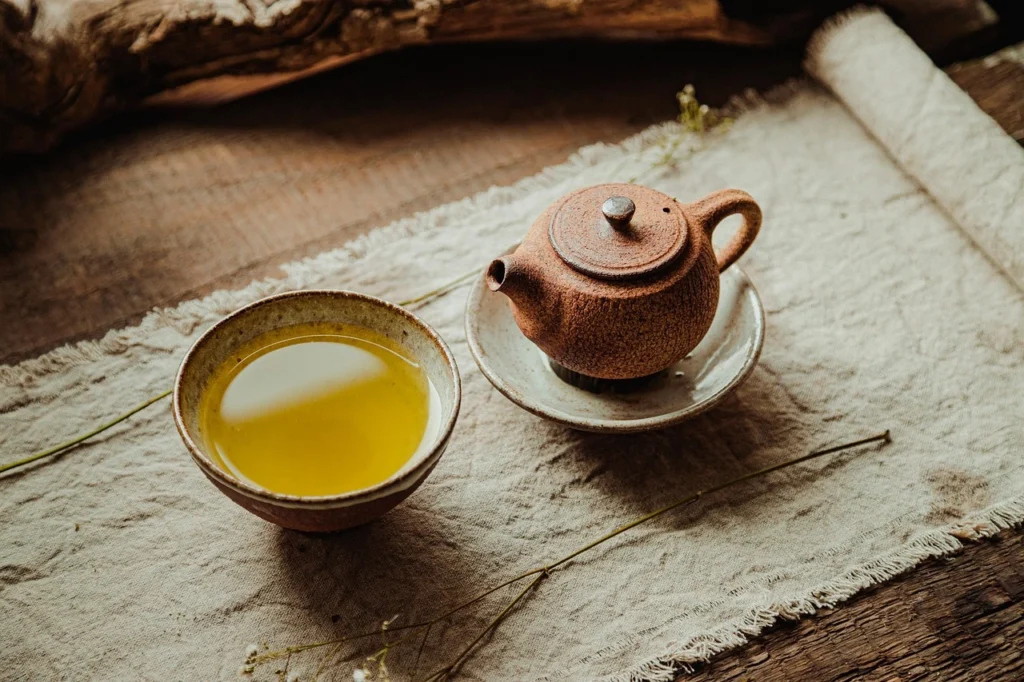
When I brew a good sencha, I’m always struck by its clarity, both in appearance and flavor. The liquor is a brilliant yellow-green, almost glowing in the cup. The aroma is fresh and invigorating, like walking through a garden after morning dew. The taste delivers a pleasant astringency that awakens your palate without overwhelming it, followed by a subtle sweetness that lingers.
Brewing Sencha Properly
One of the most common mistakes I see people make is brewing sencha with water that’s too hot. This isn’t a tea that wants boiling water. I recommend 70-80°C (160-175°F) for most sencha, with higher-quality varieties benefiting from the cooler end of that range. Steep for about 60-90 seconds for the first infusion, and you’ll be rewarded with that perfect balance of flavors.
Sencha is also wonderfully re-steepable. The second infusion, brewed at a slightly higher temperature for just 30 seconds, often reveals different nuances. Sometimes more sweetness, sometimes more umami depth.
My Personal Take on Sencha
While sencha doesn’t claim the top spot in my personal hierarchy, I deeply respect its role. It’s the tea I recommend to anyone beginning their Japanese green tea journey. It’s approachable, affordable, and forgiving of minor brewing mistakes. More importantly, it teaches you the fundamentals of what Japanese green tea should taste like. Once you understand sencha, you have a baseline for appreciating the more specialized varieties.
I keep a quality sencha in my collection for those mornings when I want something refreshing and energizing without the intensity of gyokuro or the ceremony of matcha. It’s my reliable friend, always there when I need it.
Gyokuro: The Umami Masterpiece
Now we arrive at my true passion: gyokuro, the “jade dew” that represents the pinnacle of Japanese tea craftsmanship. If sencha is the everyday hero, gyokuro is the rare treasure you reserve for special moments, or create special moments around.
The Shading Secret
What elevates gyokuro to extraordinary status is the shading process. For about 20-30 days before harvest, tea farmers cover the plants with bamboo mats or synthetic screens, blocking out 90% or more of sunlight. This might seem counterintuitive. Don’t plants need sunlight? But this deliberate stress transforms the tea plant’s chemistry in magical ways.
Without sunlight for photosynthesis, the plant produces less catechins (the compounds responsible for astringency) and maintains higher levels of amino acids, particularly L-theanine. The result is a tea with minimal bitterness and an explosion of umami. That savory, brothy, almost seaweed-like flavor defines the best gyokuro green tea & its a magical feel that seems to coat your entire mouth with silky sweetness.
Why Gyokuro Captivates Me?
The first time I properly brewed gyokuro, I understood why people describe it as a transcendent experience. The aroma alone is intoxicating-sweet, marine-like, with hints of nori and fresh vegetation. When you taste it, brewed correctly at low temperatures (around 50-60°C or 120-140°F), it’s unlike any other tea.
The umami is profound but not overwhelming. It’s accompanied by an incredible sweetness—not sugary, but a natural, amino acid-driven sweetness that seems to vibrate on your tongue. There’s a fullness, an almost buttery texture that makes the tea feel substantial despite being delicate. The finish is long and complex, evolving as it coats your palate.
What I love most about gyokuro is how it demands your attention. This isn’t a tea you drink while checking emails or scrolling through your phone. Gyokuro asks you to slow down, to be present, to notice subtle shifts in flavor across multiple infusions. It’s meditative tea-drinking at its finest.
Brewing Gyokuro: A Labor of Love
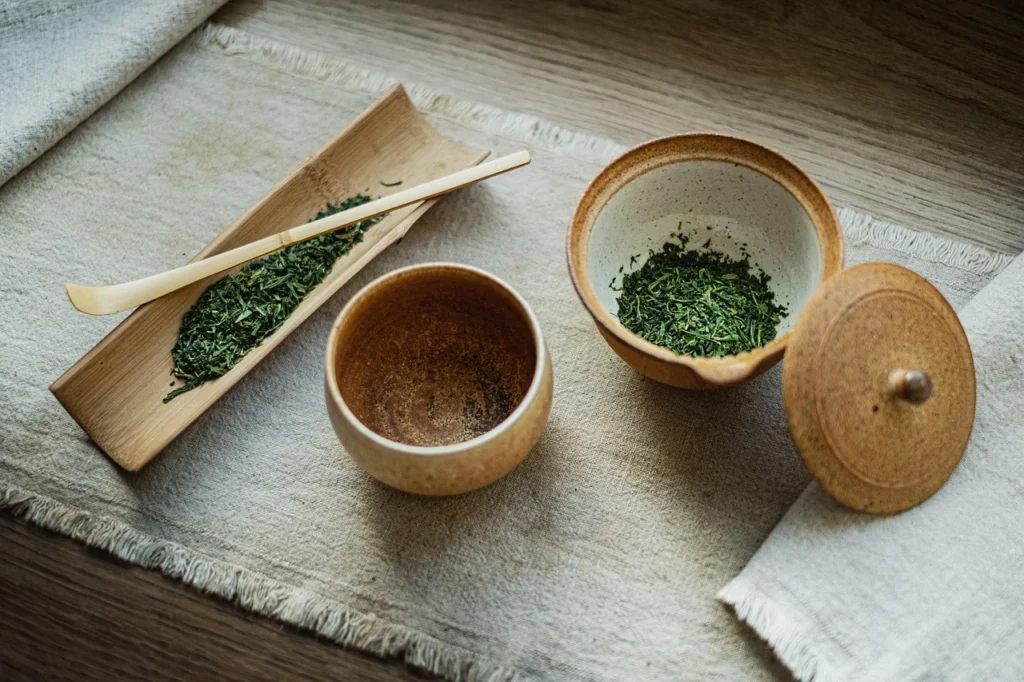
Gyokuro requires patience and precision, but the reward is worth it. I use water around 50-60°C (cooler than most people expect) and steep for two full minutes for the first infusion. Use more leaf than you would for sencha—about 10 grams for 60ml of water—and small brewing vessels that concentrate the flavors.
The second and third infusions, with progressively warmer water and shorter steep times, reveal different facets of the tea. Sometimes I’ll get four or five infusions from premium gyokuro, each one offering something unique.
Seeking the Best Gyokuro Green Tea
The finest gyokuro typically comes from Uji, though excellent examples also come from Yame in Fukuoka Prefecture. I’ve found that gyokuro rewards investment. The difference between mid-grade and premium gyokuro is substantial. When shopping, look for bright green color, intact needle-shaped leaves, and a fresh, marine-like aroma.
Matcha: The Ceremonial Powerhouse
Matcha occupies a unique position in Japanese tea culture. Unlike sencha and gyokuro, which you brew and strain, matcha is tea leaves ground into a fine powder and whisked directly into water. You’re not just drinking tea-infused water; you’re consuming the entire leaf.
Understanding Matcha’s Complexity
Like gyokuro, ceremonial-grade matcha comes from shade-grown tea plants, which explains its vibrant green color and sweet, umami-forward flavor profile. After harvesting, the leaves are steamed, dried, and then meticulously de-stemmed and de-veined, leaving only the purest leaf material called tencha. This tencha is then stone-ground into the ultrafine powder we know as matcha.
The flavor of high-quality ceremonial matcha is remarkably complex. There’s pronounced umami, creamy sweetness, and minimal bitterness when prepared properly. The texture is smooth and frothy, creating a completely different drinking experience from steeped teas. Lesser-quality culinary matcha tends toward bitterness and lacks the vibrant sweetness of ceremonial grades.
The Traditional and the Modern
What fascinates me about matcha is its versatility. In traditional Japanese tea ceremony (chanoyu), the preparation and consumption of matcha is a carefully choreographed ritual that can last hours. Every movement has meaning, from how you handle the tea bowl to how you rotate it before drinking. I’ve participated in several tea ceremonies, and there’s something profoundly centering about that level of intentionality.
But matcha also adapts beautifully to modern life. I whisk up a bowl of usucha (thin matcha) on busy mornings for sustained energy and focus. The combination of caffeine and L-theanine provides alert calmness without the jittery crash of coffee. Beyond drinking, matcha’s versatility in cooking and baking, from lattes to ice cream to pastries. Matcha has introduced countless people to Japanese tea culture.
My Relationship with Matcha
While gyokuro holds my heart, matcha commands my respect. There’s something powerful about consuming the entire leaf, knowing you’re receiving all the nutrients and compounds the tea plant has to offer. The energy from matcha feels different from other teas. More sustained, more focused.
I keep both ceremonial and culinary matcha in my pantry. The ceremonial grade is for those moments when I want to fully engage with the tea, whisking it mindfully and appreciating its nuances. The culinary grade is for my morning matcha lattes, baking experiments, and sharing with friends who are new to matcha.
Preparing Matcha Right
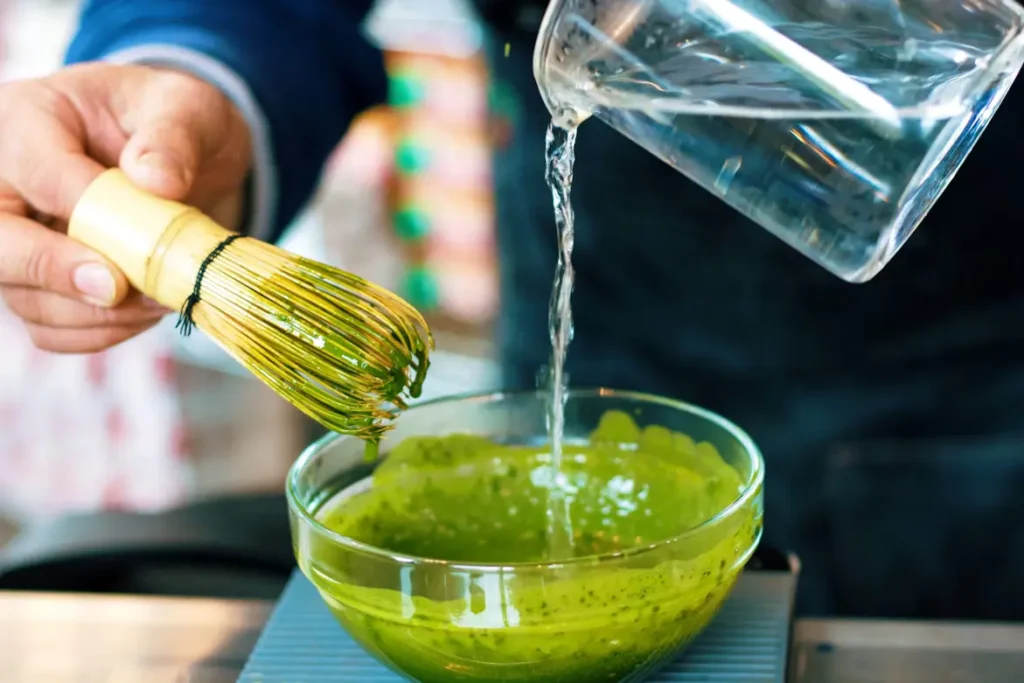
For usucha, I sift about 2 grams (roughly half a teaspoon) of matcha into a bowl, add about 70ml of water at 75-80°C, and whisk vigorously in a zig-zag motion until a fine foam appears on the surface. The result should be smooth, frothy, and vibrant green—never lumpy or dull.
Koicha (thick matcha) uses twice the amount of matcha with less water, creating a paste-like consistency that’s even more intense. This is reserved for formal tea ceremonies and requires premium matcha.
Comparing the Three: Which Tea for Which Moment?
Now that we’ve explored each variety in depth, how do they compare directly?
Flavor Profile: Sencha offers refreshing balance with vegetal notes and moderate astringency. Gyokuro delivers profound umami, sweetness, and minimal bitterness. Matcha provides intense, concentrated flavor with umami, sweetness, and a unique frothy texture.
Caffeine and L-theanine: All three contain caffeine, but matcha leads the pack since you consume the entire leaf. However, all three also contain L-theanine, which moderates caffeine’s effects. Gyokuro has the highest L-theanine content among steeped teas, creating that characteristic calm alertness.
Price Point: Sencha is the most accessible, with quality options starting around $15-30 per 100g. Gyokuro is premium, often $40-150+ per 100g for top-grade examples. Ceremonial matcha falls in between, typically $25-80 per 30g, depending on quality.
Best Occasions: I reach for sencha during everyday moments—afternoon refreshment, casual tea breaks with colleagues. Gyokuro is for contemplative mornings, meaningful conversations, or celebrating something special. Matcha serves double duty: ceremonial matcha for focused, meditative moments, and culinary matcha for energizing mornings or creative cooking.
Final Thoughts: Three Teas, One Journey
After years of exploring Japanese green teas, I’ve come to appreciate that sencha, gyokuro, and matcha aren’t competitors—they’re companions on the same journey. Each one illuminates different aspects of what makes Japanese tea culture so captivating.
Sencha teaches us balance and reliability. It’s the foundation, the everyday excellence that reminds us that quality doesn’t always require extravagance. Matcha shows us versatility and intensity, bridging ancient tradition with modern adaptability. And gyokuro—beautiful, demanding gyokuro—reveals what’s possible when tea cultivation becomes high art.
My personal preference for gyokuro’s umami depths doesn’t diminish my appreciation for the others. Some mornings call for the bright clarity of sencha. Some afternoons need the focused energy of matcha. And some evenings deserve the meditative luxury of gyokuro.
If you’re just beginning your journey with Japanese green tea, I encourage you to experience all three. Start with a quality sencha to understand the baseline. Graduate to matcha to explore intensity and tradition. And when you’re ready for something truly special, invest in premium gyokuro and give it the time and attention it deserves.
The world of Japanese green tea is vast and rewarding. These three varieties—sencha, gyokuro, and matcha—represent its heart. Each cup is an opportunity to connect with centuries of tradition, the dedication of tea farmers, and your own capacity for presence and appreciation. That’s the real magic of Japanese tea: it’s not just something you drink; it’s something you experience.
Kanpai to your tea journey, wherever it may lead.